Diamond Tipped Cutting Tool Guide
(PCD & CBN)
Understanding Diamond Cutting Tools
Diamond cutting tools are widely used in manufacturing applications where conventional cutting tools experience excessive wear or cannot maintain the required cutting performance.
Diamond tooling is particularly useful when machining abrasive materials, non-ferrous metals, composites, and other materials that present challenges for conventional carbide tooling.
Several types of diamond tooling are available, each suited to different machining applications. These include Polycrystalline Diamond (PCD), Cubic Boron Nitride (CBN), Chemical Vapor Deposition (CVD) diamond coatings, and diamond grit coated tools.
Understanding the differences between these technologies can help determine which tooling is best suited for a particular application.
What Is Polycrystalline Diamond (PCD)?
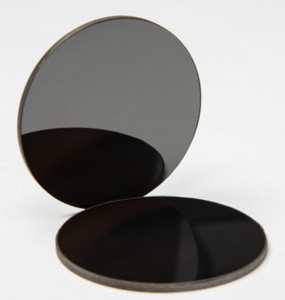
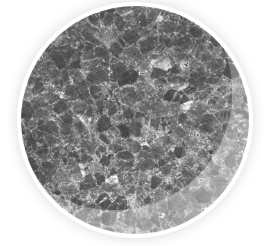
Polycrystalline Diamond (PCD) is a synthetic diamond material manufactured by sintering diamond particles together under high pressure and high temperature.
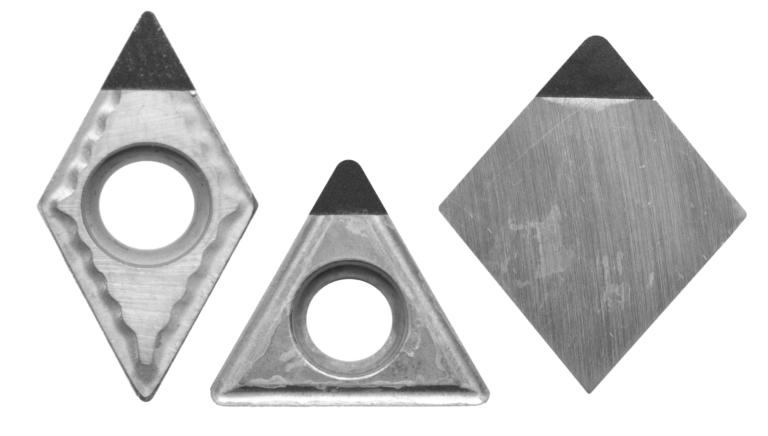
PCD cutting tools typically consist of a diamond layer bonded to a carbide substrate. The PCD material is then cut and attached to a tool body or insert, where it forms the cutting edge.
PCD offers exceptional abrasion resistance and is commonly used in applications involving non-ferrous metals and abrasive materials.
Common PCD Applications
-
Aluminum and aluminum alloys
-
Copper and brass
-
Graphite
-
Carbon fiber reinforced plastics (CFRP)
-
Fiberglass and other composites
-
Plastics
-
Green ceramics
-
Green carbide
PCD tooling is available in various diamond grain sizes and grades. The appropriate grade depends on the workpiece material, cutting conditions, and required surface finish.
Fine-grain PCD grades are generally selected for applications requiring sharp cutting edges and fine surface finishes, while coarser grades may offer advantages in abrasive applications.
What Is Cubic Boron Nitride (CBN)?
Cubic Boron Nitride (CBN) is a synthetic superabrasive material commonly used for machining hardened steels, cast irons, and certain high-temperature alloys.
Although CBN is not a form of diamond, it is frequently grouped with diamond tooling because of its exceptional hardness and wear resistance.
CBN cutting tools are typically manufactured using Polycrystalline Cubic Boron Nitride (PCBN), which consists of CBN particles bonded together to form a cutting material.
Unlike PCD, CBN maintains better chemical stability when machining ferrous materials at elevated temperatures.
Common CBN Applications
Hardened alloy steels
Tool steels
High-speed steels
Hardened bearing steels
Cast irons
Powdered metals
Inconel and certain nickel-based alloys
PCD vs. CBN: What's the Difference?
Although both materials offer exceptional hardness and abrasion resistance, PCD and CBN are intended for different machining applications.
| Property | PCD | CBN |
|---|---|---|
| Material | Polycrystalline Diamond | Cubic Boron Nitride |
| Primary Applications | Non-ferrous and abrasive materials | Hardened ferrous materials |
| Aluminum | Excellent | Generally not preferred |
| Composites | Excellent | Generally not preferred |
| Graphite | Excellent | Generally not preferred |
| Hardened Steel | Not recommended | Excellent |
| Cast Iron | Application dependent | Commonly used |
| Abrasion Resistance | Extremely high | Very high |
| Common Tool Types | Inserts, drills, end mills, specialty tools | Turning inserts, boring tools, specialty tools |
The workpiece material is typically the first consideration when selecting between PCD and CBN.
For aluminum, graphite, and composites, PCD is generally the preferred cutting material. For hardened steels and many cast irons, CBN is often more suitable.